From pepperpot to garlic pork, Guyanese food is the kitchen of six peoples—preserving our history and shaping who we are.
Some memories arrive as flavours before they become stories. To eat in Guyana is to inherit a history, a culture, a kitchen shaped by centuries of survival and celebration.
A pot of curry bubbling before sunrise. Black cake wrapped in rum-soaked cloth until Christmas. Steam rising from a pepperpot thick with cassareep. To eat in Guyana is to inherit a history. It is to step into a kitchen shaped by centuries of survival, adaptation, and celebration.
Guyanese cuisine is a mosaic of our six peoples. Indigenous, African, Indian, Chinese, Portuguese, and European. Migration and memory stitched into one table. No dish belongs to a single hand. Every meal carries something old, something adapted, something borrowed, and something unmistakably ours.
Table of Contents Show


Where Cultures Meet the Stove
We are often called a land of six races, but in the kitchen, the borders soften. African stews simmer beside Indian curries. Chinese chow mein appears on Sunday plates. Indigenous cassava bread sits beside Portuguese pastries during holidays. Hot pepper sauce finds its way into everything.
A walk through a Guyanese market reveals the blend in real time. Bora beside bok choy. Tamarind beside thyme. Turmeric, cassava, and canned milk in the same basket. One pantry. One pot. One meal.
What makes Guyanese food distinct isn’t the presence of these influences. It’s how they overlap, borrow, and evolve into something recognizably ours.

The Soul of the Pot
Some dishes hold the weight of memory more than others.
Guyanese Dishes That Carry Memory
Pepperpot is one of them. Rich with meat, warm with cinnamon and cloves, and deepened by cassareep made from bitter cassava. Traditionally served at Christmas, but kept simmering in many homes all year. More ritual than recipe.
Metemgee is another. A coconut stew of cassava, plantain, and sweet potato. Sometimes salt fish. Sometimes chicken. Always love. Born from necessity. Carried forward as comfort.
Cook-up rice carries two rhythms. The Saturday pot is comfort. Rice, beans, meat, coconut milk, and thyme simmered down low—the kind of dish that stretches to feed whoever walks through the door. The Old Year’s Night pot is ritual. Black-eyed peas, bubbling toward midnight, set to usher in the new year. The belief is simple. A full pot at the turn of the year means a full pantry for the year ahead. Brought from West Africa by enslaved ancestors. Kin to Ghanaian waakye. One pot holding many things. A quiet metaphor for the country itself.
Curry has its own rhythm. Ask a Guyanese cook how they make it, and you will hear six answers. Cumin, turmeric, masala, and garlic. Indian heritage gave us roti, dhal, and channa, but the versions we make here evolved in our hands. Our roti folds differently. Our masala is local. Our curry tastes like home.


Six Hands at the Stove
From the African diaspora, we inherit the art of layering flavor. Meats cooked low and slow with thyme, green seasoning, and bold pepper. Cook-up rice and fried plantain that feel ancestral even when reimagined in modern kitchens. And the Demerara sugar that bears the river’s name—folded into the rum, the browning, the black cake.
Chinese influence lives in our street food. Fried rice. Lo mein. Sweet and sour chicken. The wok is traditional. The taste is ours.
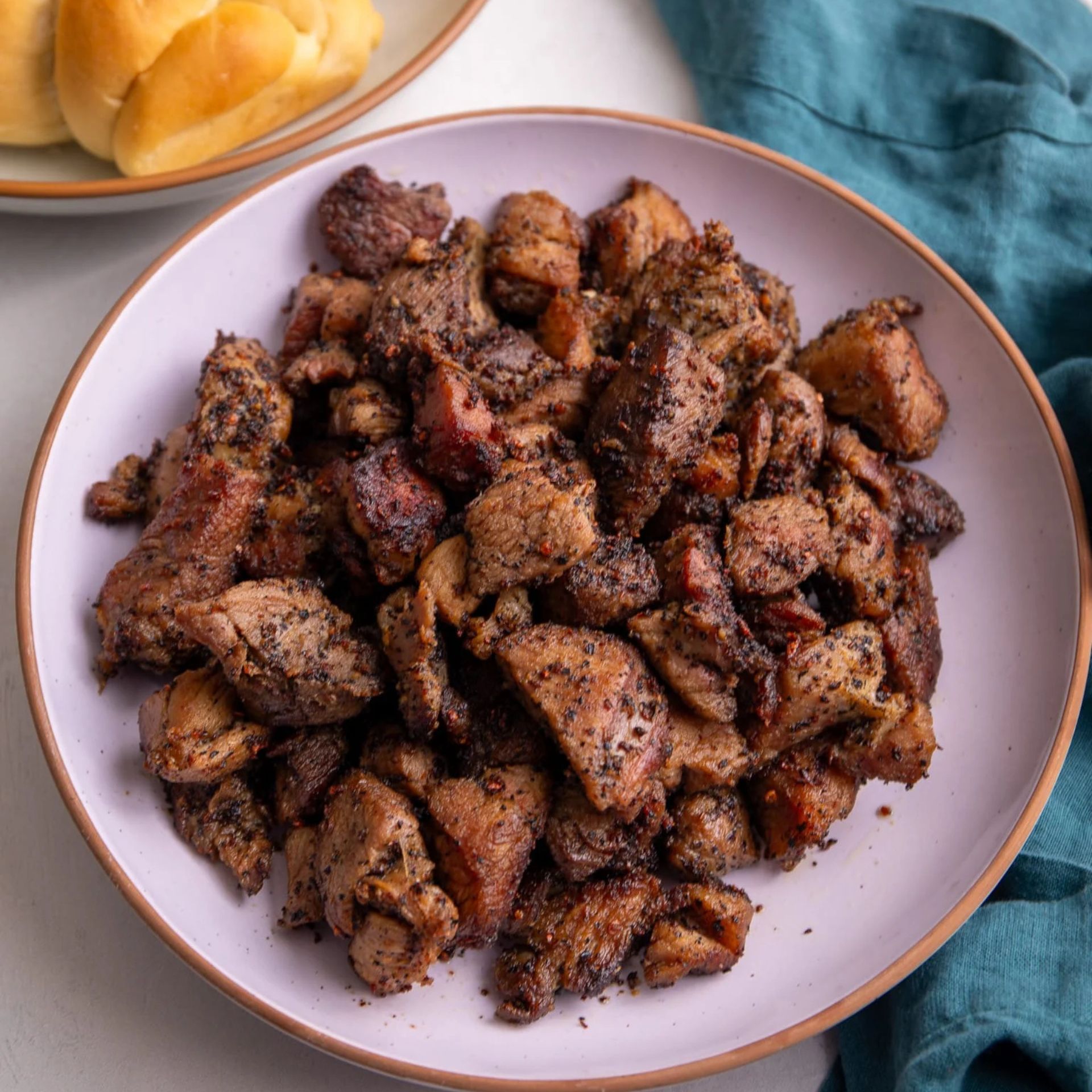
Portuguese legacy arrived through Madeira and settled at the Christmas table. Garlic pork begins days before—a fatty cut brined in vinegar with crushed garlic, wiri wiri, and Guyanese thyme. The Madeiran carne vinha d’alhos, reshaped on this side of the Atlantic. By Christmas morning, it is fried hot and served with plait bread, itself a Portuguese inheritance. The legacy lingers in our sweets too. Pastries. Preserved fruits. Black cake ground so fine it becomes velvet—its bones from British plum pudding, its velvet from the Madeiran bolo preto. A wedding. A funeral. A Christmas. All in one bite.
From Indian heritage we inherit the language of spice. Chutneys ground green from coriander and mint. Mango achar in glass jars on every shelf. Sweet rice for prayer days. Parsad and kurma at Diwali. Carried across oceans by indentured ancestors and rooted into the daily table.
European inheritance arrived with the colonizers and settled into the everyday. Tea taken with milk and sugar. Black cake with marzipan. Bread baked in pans, not over coals. Pastries at every funeral and christening. A quiet imprint, but one we still set the table around.
And from our Indigenous peoples come the deepest roots. Cassava bread. Pepperpot. Farine. Wild meats and herbs. Techniques that pre-date colonization. Quiet contributions that form the foundation of the Guyanese table.

The Everyday Table
Some of the best Guyanese food is not ceremonial. It is everyday. It is foil-wrapped chow mein from a roadside stall. It is pholourie dipped in sour tamarind sauce. It is bake and saltfish on a Sunday morning. It is fried fish with farine on a riverbank. These dishes are not introductions. They are invitations.
And to drink alongside: mauby poured cold from the fridge, sorrel at Christmas, ginger beer brewed strong enough to bite, peanut punch from a roadside cooler.
“These dishes are not introductions. They are invitations.”


Where to Taste It
You will find our culture on restaurant menus—Sheriff Street alone is a dining strip in itself—but you taste Guyana best in motion: in markets, at community cook-ups, at festivals, and in the unassuming corners where someone is grilling, frying, or stirring something worth stopping for.
Stabroek Market hands you a basket before you know what’s in it. Heritage Villages during the Guyana Festival turn one afternoon into six countries on a plate. Mashramani fills the streets with curry and burnt sugar. Guyana Restaurant Week puts the country’s chefs on tasting menus. Emancipation Day calls the drums out and the cook-up rice on. Diwali sweets arrive in foil-lined boxes from neighbours you’ve never met. Across the coastlines and river towns, someone is always selling something good from a cooler or a backyard grill.
The best meals are rarely announced. They are found.
The Table Where We Agree
Guyanese food is not just what we eat. It is how we gather, how we celebrate, how we remember. It is how we honor where we come from and how we shape where we are going. In a country shaped by many hands, the table is where everything comes together. This is what home tastes like.
◆ Start with what you know.
◆ Stay open to what you don’t.
◆ The best thing you will eat might be something you cannot pronounce—yet.